A Guide to Supporting Pets Through Household Changes and Stress
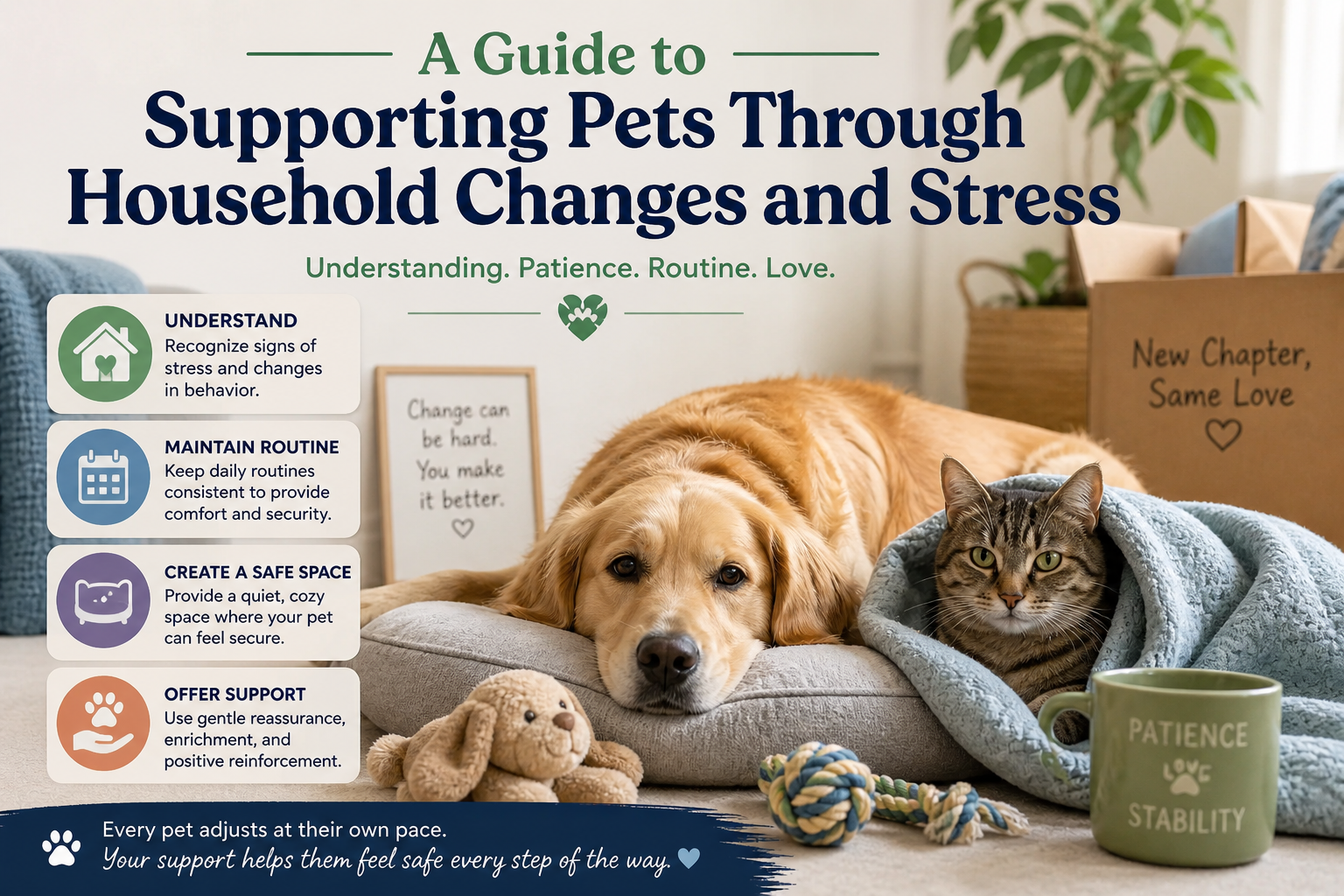
Local pet owners often focus on the logistics of household transitions, a move, a new baby, a roommate change, while missing how quickly those shifts can affect pet emotional well-being. When familiar cues disappear, routine disruption can show up as clinginess, restlessness, accidents, appetite changes, or sudden reactivity, and those patterns can stick if they’re brushed off as “just a phase.” The real pet care challenges tend to surface at the busiest moments, when schedules are tight and trust in help matters most. Recognizing stress early creates the chance to protect stability before small behaviors become the new normal.
Why “Normal” Changes Feel Stressful to Pets
For pets, stability comes from predictable patterns: where they sleep, who comes and goes, and when food and walks happen. When those cues shift, their brain reads it as uncertainty, even if the change is positive for you. A move changes every scent and sound, and it is no surprise that moving consistently ranks among the top reasons for pet surrender.
This matters because stress rarely stays “emotional” for long. It can spill into skipped meals, potty accidents, or guarding behavior, which makes mornings harder and evenings tense. Reliable walkers and pet sitters help keep key routines steady when your calendar is already packed.
Picture bringing home a new baby or roommate. Your dog suddenly gets fewer greetings, different walk times, and a noisier house. Small, consistent rewards can speed adjustment, since positive reinforcement training builds trust around new patterns. With the stress mechanics clear, building predictable care blocks gets much easier to manage.
Use Flexible Online Learning to Protect Your Time at Home
Because pets feel safest when their days stay predictable, protecting your time at home can make a big difference during a career transition. Earning an online degree can offer flexible scheduling and at-home learning, which helps you stay present and keep steadier routines for your dog or cat even when your work life is changing. If you’re considering a path in healthcare, you might look into earning a family nurse practitioner master’s degree so you can take a hands-on role in diagnosing and treating patients; for program details, you can click here. As you move through any transition, the next step is using simple, practical ways to help your pet stay calm day to day.
Follow a 7-Step Plan to Keep Pets Calm During Transitions
Big changes, moving, a new work schedule, a new baby, or a different caregiver, can rattle even easygoing pets. Use this step-by-step plan to keep routines steady, add comfort, and support healthy adjustment without guessing.
1. Anchor the “non-negotiable” routine: Keep feeding times, potty breaks, and sleep as consistent as possible, even if everything else is in flux. If your week is getting busier (new classes, clinicals, or a shift change), block two predictable care windows each day, morning and evening, and protect them like appointments. Pets relax when they can predict what happens next, and that predictability is a powerful form of comforting pets during change.
2. Start a 10-minute decompression ritual: Pick one calming activity you can do the same way every day: a slow sniff-walk, gentle brushing, or quiet cuddle time on a mat. Do it after a common trigger like you getting home, guests leaving, or the kids going to bed. Repetition teaches “this is the settling time,” which helps your pet downshift faster during transitions.
3. Set up a safe zone (and keep it sacred): Choose one spot your pet can always retreat to, crate, bed in a corner, or a room with a baby gate. Stock it with water, a washable blanket, and a chew, then ask everyone to leave the pet alone when they’re there. This is one of the simplest adjustment strategies for pets because it gives them control when the rest of the house feels unpredictable.
4. Add daily enrichment that burns brainpower: Mental work often tires pets out more effectively than constant physical activity, especially when your schedule is tight. Rotate 2–3 options, snuffle-style feeding, short scent games, or puzzle toys that make them work for part of a meal, so your pet stays occupied while you’re in meetings or studying. Start easy, then increase difficulty every few days to prevent frustration.
5. Use tiny training sessions to rebuild confidence: During upheaval, pets often “forget” manners because stress crowds out learning. Practice one cue at a time, sit, come, wait, for 1–3 minutes, two or three times a day, and positively reinforce every success with treats, praise, or a toy. Consistent, calm boundaries are behavioral support for pets that reduces anxious testing and helps them understand what still stays the same.
6. Plan for alone-time and new helpers before you need them: If a roommate moves out or your work hours shift, gradually rehearse departures: step out for 30 seconds, then 2 minutes, then 10, rewarding calm behavior. If a dog walker, pet sitter, or pet taxi will step in, do a “meet-and-treat” visit and one short practice outing so your pet learns the new routine in low-stakes conditions.
7. Track stress signals and adjust one variable at a time: Watch for changes like pacing, hiding, accidents, appetite shifts, extra vocalizing, or clinginess. When something worsens, change just one thing for 3–5 days, walk timing, enrichment difficulty, visitor access, so you can tell what helped. This steady approach makes it
easier to tell the difference between normal adjustment and a problem that needs extra support.
These seven steps keep pet routines realistic while adding enrichment and structure, so your pet can settle into each new phase with fewer setbacks, and you’ll feel more confident interpreting which behaviors are expected and which deserve a closer look.
Questions Pet Owners Ask During Big Transitions
Q: What are the most common signs my pet is stressed, not “being stubborn”?
A: Look for a cluster of changes: pacing, hiding, panting when it is not hot, appetite shifts, accidents, or sudden clinginess. Stress often shows up as extra vigilance, like startling easily or scanning the house. If the behavior is new, frequent, and not improving over a week, support and structure should increase.
Q: When should I call my vet instead of waiting it out?
A: Call if you see vomiting or diarrhea, refusing food for 24 hours, sudden aggression, self-injury, or panic that escalates. Medical issues can mimic anxiety, so ruling them out prevents guessing. If you are unsure, a quick check-in is worth it.
Q: Can I comfort my pet without reinforcing anxious behavior?
A: Yes. Calm reassurance is fine, but reward the moments of quiet and curiosity, not the frantic jumping or nonstop whining. Pair soothing touch with a simple cue like “settle,” then give a chew or scatter a few treats when they relax.
Q: How do I know if this is separation anxiety or just a temporary adjustment?
A: Separation anxiety usually looks like distress that starts soon after you leave and repeats most departures, often with scratching, barking, or accidents. It is also common enough that some reports suggest dogs suffer from separation anxiety, so you are not alone. Start with brief, planned absences and track patterns, then get professional help if it does not trend down.
Q: Why did my previously trained dog start having accidents or “forget” cues after we got busier?
A: Stress can cause a temporary backslide that returns to previously learned behaviors. Reset expectations for a couple weeks, tighten the schedule, and reward the basics like pottying outside and coming when called. If accidents continue despite more breaks, rule out a urinary or GI issue.
Steady Routines That Help Pets Feel Safe Through Change
Big life shifts can leave pets confused, clingy, or unsettled, even when nothing “bad” is happening. The most reliable way to support pet well-being is mindful pet care paired with proactive transition planning: keep signals consistent, respond calmly to stress, and treat comfort as part of pet-owner responsibility. With this approach, pets recover faster, routines hold, and enhancing pet comfort becomes a normal part of daily life rather than a last-minute fix. Consistency reduces stress more than reassurance ever can. Choose one next step this week, schedule-proof one routine, reinforce a familiar comfort cue, or add professional support if anxiety persists. That steady support builds resilience and protects health and connection through every new season.